
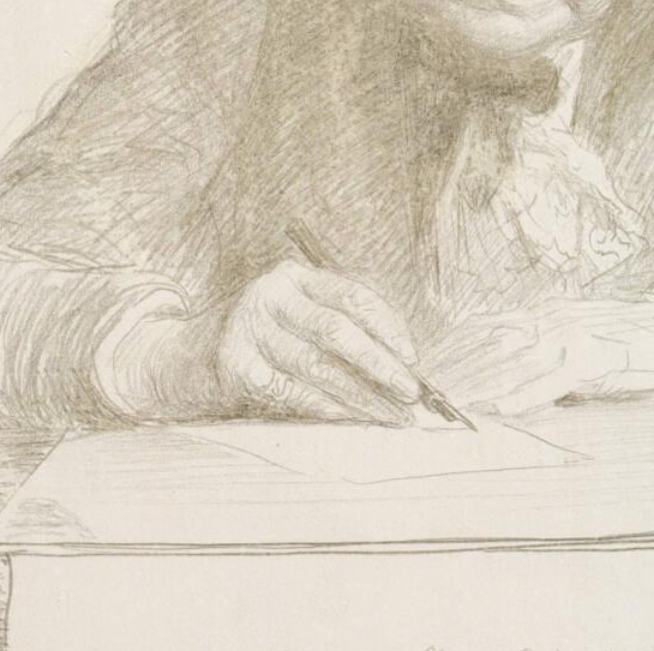
Metalpoint, and its most common form, the silverpoint, is an almost forgotten medium, having been superseded by the more convenient pencil. Nor have many old silverpoint drawings survived. Drawings are fragile by their very nature. Furthermore, silverpoint was often used for sketches or underdrawings. Nevertheless, this medium certainly has a history.
Undoubtedly, metal rods have been used for drawing ever since humans were able to make them (3000 BC). Wherever you are, you pick up a stick and start drawing – it’s human nature.
But simply drawing with a metal rod does not in itself constitute metalpoint. This requires a chalky surface that grinds the metal into very fine particles and creates a contrast with the darker metal. It is not known when this was first attempted.
* Featured image: [detail of] Portrait of Marie von Ebner-Eschenbach, by Ludwig Michalek, 1914. The Albertina Museum, Vienna.
Classical Antiquity
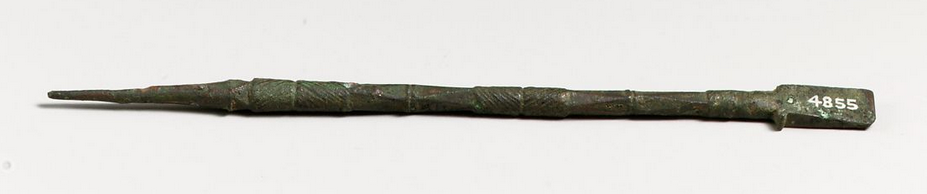
In ancient times, as in the example from Greece above dating from somewhere between the fourth and first centuries BC, bronze rods were certainly used for writing. Usually on beeswax on a handy little wooden board, though sometimes the board was whitewashed. Texts have survived, but as far as I know, drawings of this kind have not.
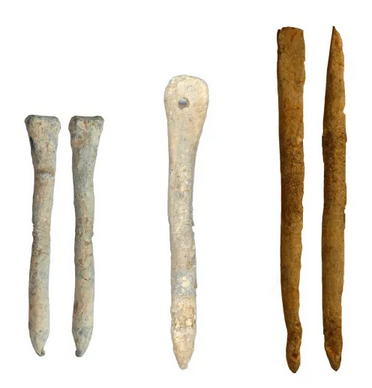
It is worth bearing in mind that the pencil was not invented until much later. In fact, the only options for sketching were charcoal – which smudges very easily – and metalpoint. Graphite did not appear until the sixteenth century. It was not until a century later that pencil production really took off.
Middle Ages
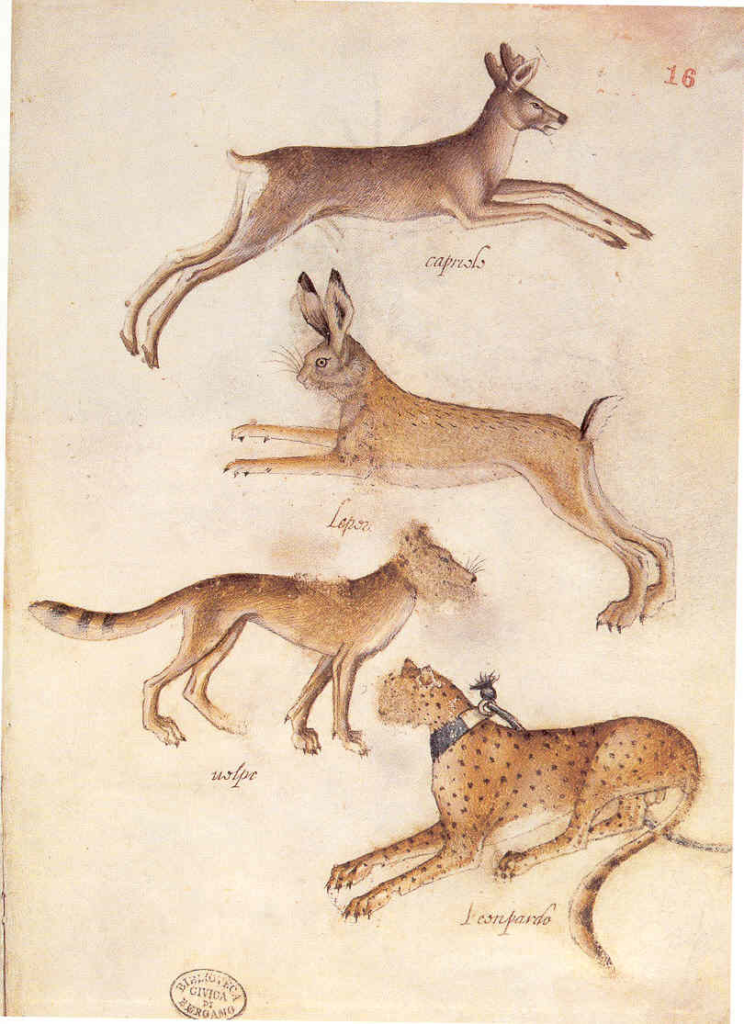
Due to the fragile nature of this type of drawing, very little of it has survived. The early Middle Ages also remain a mystery as far as silverpoint is concerned. From the late Middle Ages (late Gothic period), we have the example below by Giovannino de’Grassi (Milan, late fourteenth century). And in particular his sketchbook (Cassaf 1.21 in the Biblioteca Civica Angelo Mai in Bergamo), which is full of animal portraits.
Renaissance
Around 1500, in his artists’ handbook Il Libro dell’Arte, Cennino d’Andrea Cennini advised artists to sketch in charcoal and to fix the drawing by going over it with a silverpoint. Pisanello exemplifies the very early Renaissance with the horse’s head shown below, dating from the early 15th century and executed in lead and ink.
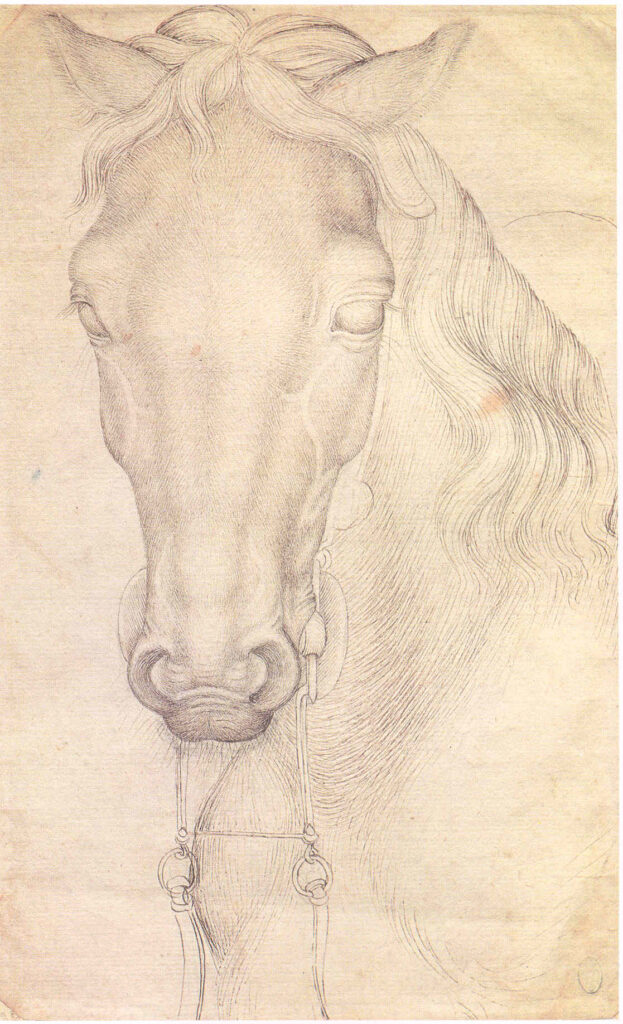
Many silverpoint drawings from the Renaissance have survived. These are still mainly preparatory drawings and sketches, as in the case of Giotto, for example. In Northern Europe, too, artists such as Rogier van der Weyden, Jan van Eyck and Albrecht Dürer made frequent use of the silverpoint.
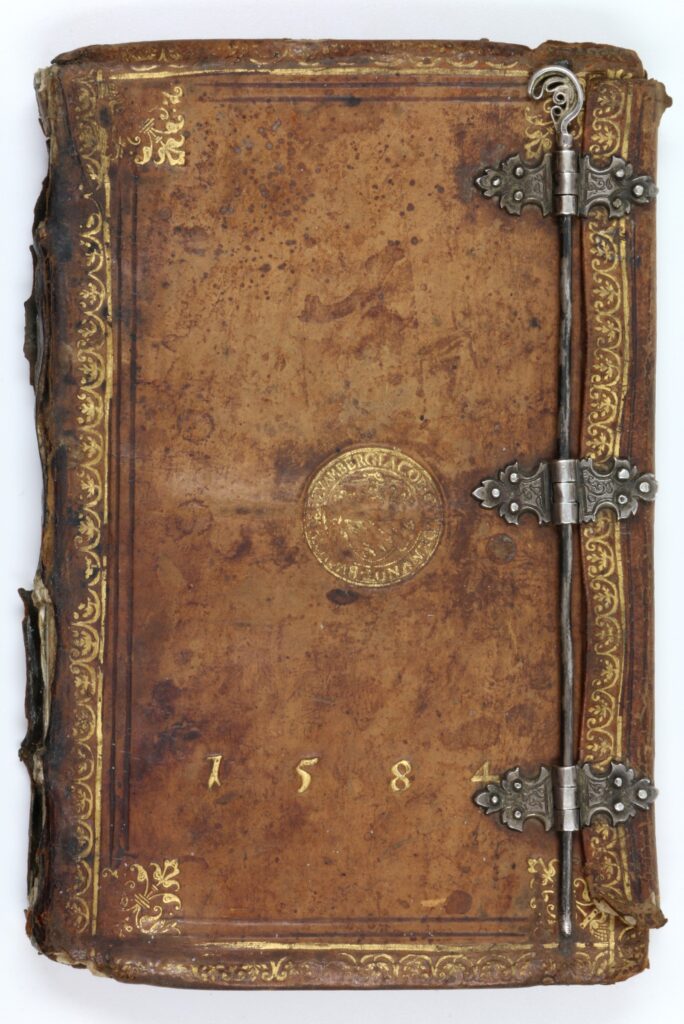
As is well known, the Renaissance drew inspiration from classical antiquity. That is not the reason they used silverpoint: there was simply no practical alternative at the time. Charcoal and various types of chalk smudge easily; ink is truly indelible and not practical when travelling.
Towards the end of the sixteenth century, and particularly in the seventeenth, the cheaper, more practical graphite pencil took over from the silverpoint as a sketching medium. Rembrandt picked up the silverpoint once more on a rare occasion, but after that, things went quiet around the silverpoint for a century or two.
Ja wir müssen annehmen, daß, als die große Silberstiftzeichnung, die Künstlerzeichnung, schon aufgehört hatte, das ‘Büchlein mit dem Stefft’ noch lange im Gebrauch war. (Yes, we must assume that, even after the large silver-point drawings – the artist’s drawings – had already ceased, the ‘Little Book with the Stylus’ remained in use for a long time. *Meder, Die Handzeichnung, 1923)
The Romantic Period
In the nineteenth century, the Romantics rediscovered metalpoint. This was no coincidence. People looked back on the past with a sense of nostalgia. Among writers, there was a renewed appreciation for medieval folk tales in an attempt to invent their own, more nationalistic myth of grandeur, rather than drawing on the Classical Antiquity of Southern Europe.
Intermezzo: Mislabelling?
It’s still quite difficult to find examples from this period. I wonder whether, from time to time, museums might mistakenly label silverpoint as pencil out of ignorance. Certainly when it comes to ‘pencil on prepared paper’, because why would you prepare paper for pencil?
For instance, I recently bought a silverpoint drawing by one of my teachers at an auction, which had been incorrectly described as a pencil drawing. The teacher assured me that this particular drawing was indeed done in silverpoint (and the connoisseur can see that too, partly because of the brownish oxidation).
The Lukas Society, founded in 1808 and led by Franz Pforr and Friedrich Overbeck, and their successors, the Austro-German Nazarenes in Rome, looked with great admiration upon their great Renaissance role models, Raphael and Dürer. They were keen to use Christian themes as a counterpoint to those of classical antiquity, which were still being taught at the leading academy in Vienna.

In England, William Holman Hunt, John Everett Millais and Dante Gabriel Rossetti, amongst others, founded the Pre-Raphaelite Brotherhood in 1848. They modelled themselves on their great Renaissance role model, Raphael. Many of the drawings of their heroes were, whether out of necessity or not, executed in silverpoint, so theirs were as well.
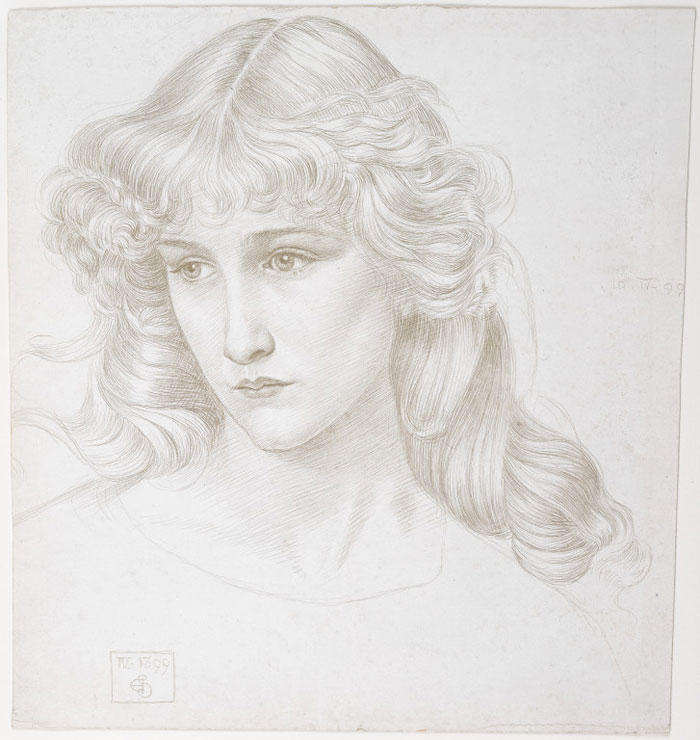
By the late nineteenth century, merely imitating Renaissance art gave way to greater experimentation. Metalpoint evolved from an archaic sketching medium into a new, independent drawing medium. This was also the point at which goldpoint emerged: more expensive and, in fact, somewhat unwieldy, yet perfectly suited to the dreamy portraits of that era.
The Romantic period was the first in which the use of silverpoint was not driven by pure practical necessity. Since then, the choice of silverpoint has been either aesthetic or conceptual.
Twentieth Century
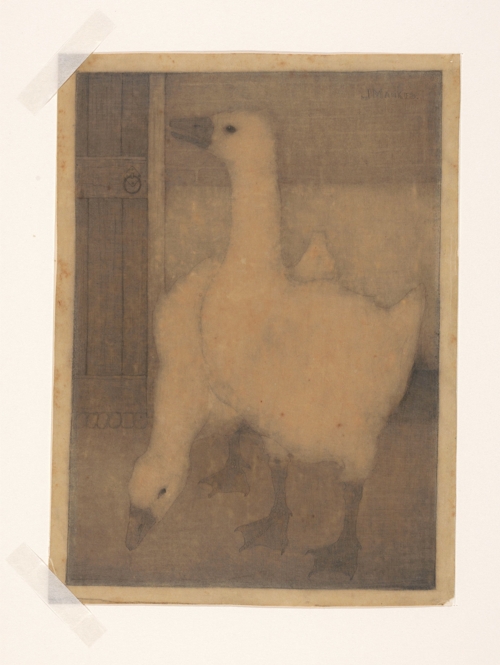
In the twentieth century, the popularity of silverpoint declined once again. It is still used here and there, but without the driving motive of the Romantics (a return to the past) to use a drawing medium that is more difficult to work with than a pencil.
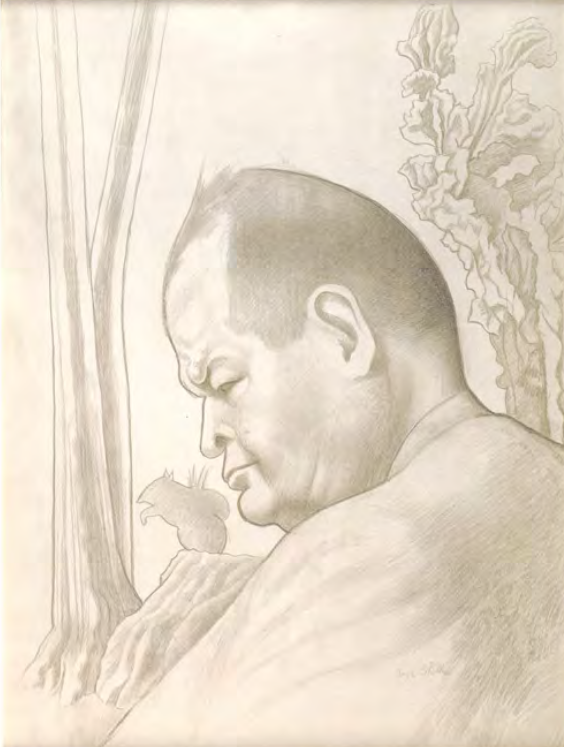
For practical reasons, I am writing this English-language website for Ireland and mainland north-western Europe, not for the United Kingdom or the United States. It is interesting to take a moment to look at the differences between us and these countries. Paintings are, of course, incredibly expensive and often reserved solely for the elite. But during the Golden Age, a whole group of merchants emerged who, whilst not of noble birth, did have money to spend. They filled the gap between great luxury and no luxury at all. That is why a market for drawings and art prints developed here quite early on.
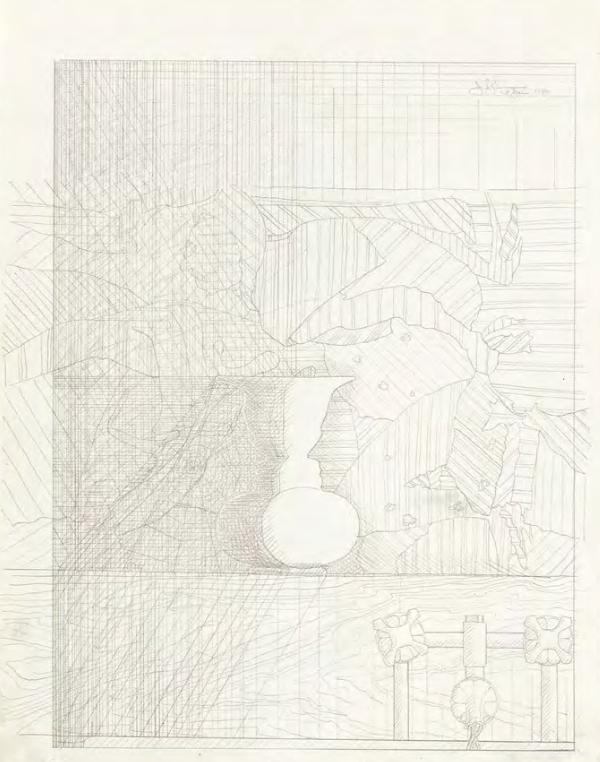
Then came the twentieth century. The visual arts underwent dramatic developments. The art academies in the Netherlands (the home of Zilverstift.nl) focused largely on abstract art. It’s all about the idea; technical skill comes second. If necessary, you simply hire someone to handle that. There is little room for a drawing medium with a steep learning curve such as silverpoint. In the Anglo-Saxon countries, art schools remain much more focused on the older techniques. They have simply never stopped teaching silverpoint.
Metalpoint In the Present
Where do you think silverpoint is still used? Exactly. Shops here no longer sell materials and supplies at all, or only the bare minimum. Whereas in the United Kingdom and the United States, silverpoint has never gone out of fashion – and in recent decades there has been a renewed surge of interest in experimenting with it: from traditional, realistic figurative drawings to abstract interplay of lines and colours in all metals. My aim is to spark a new silverpoint revival here too.
