
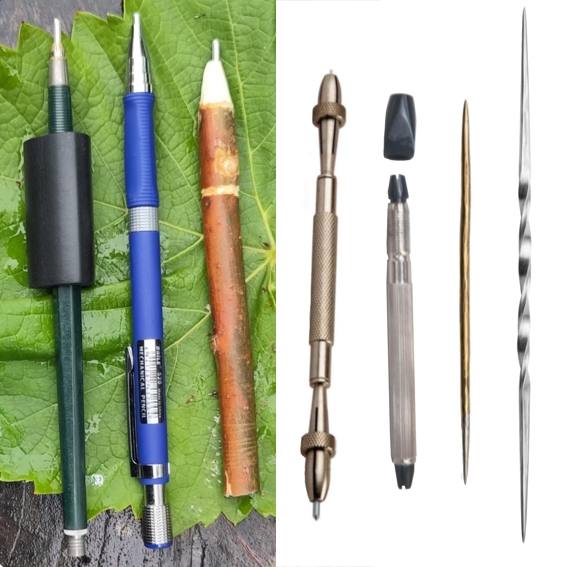
There are a few types of metalpoints. Some are very beautiful and historically authentic, others are simply affordable tools – the drawing results do not differ much, if at all. Here are the different types and where to find them.
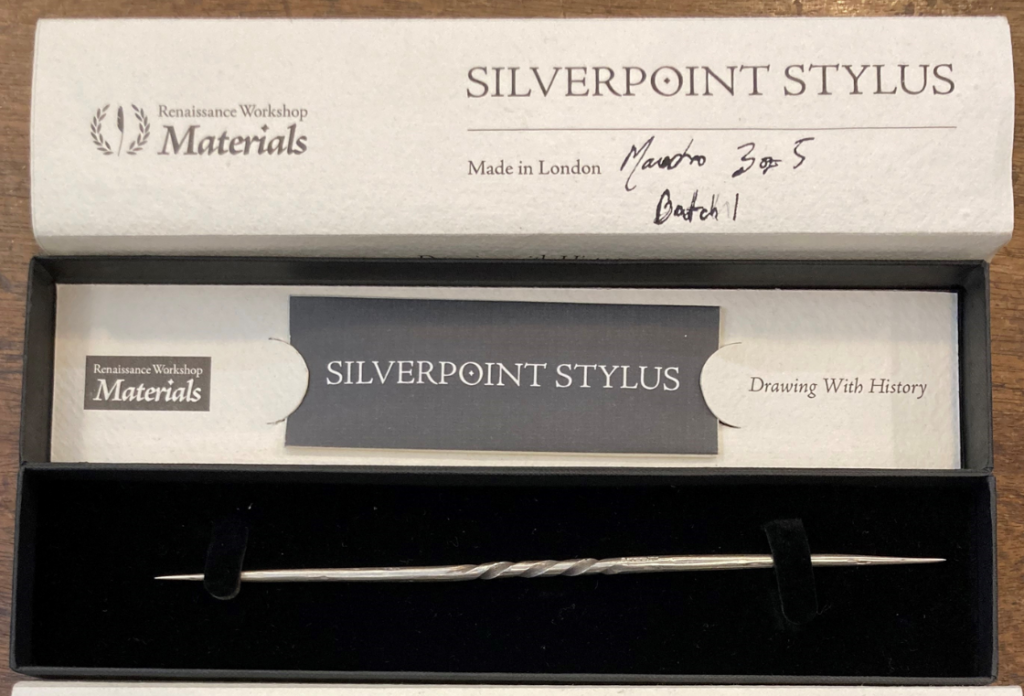
Historically Authentic Silverpoints
Renaissance facsimiles are beautiful, but because of the craft needed to make them, and the fact that the handle is completely metal – they are extremely expensive (hundreds of euros). I would love to own one! But I wouldn’t use them, I would proudly showcase them in a glass case.
Though strictly speaking you don’t need a facsimile to draw with silver or other metals, they are, like I said, beautiful and historic. If you have the cash or if you are an artist who enjoys making art in the old ways, go for it!
There is something to be said to be doing it like the artists in the heyday of the medium. You can make paper yourself, like the artisans of the Renaissance. You can melt rabbit glue, make your own silverpoint ground. And you can use a genuine silverpoint fashioned in the way it has been documented in paintings by the old masters.
Fancy Silverpoint Holders
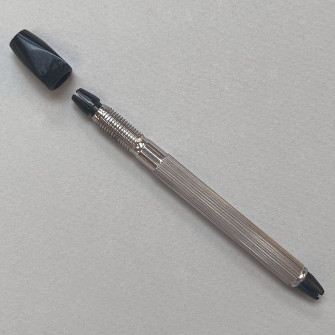
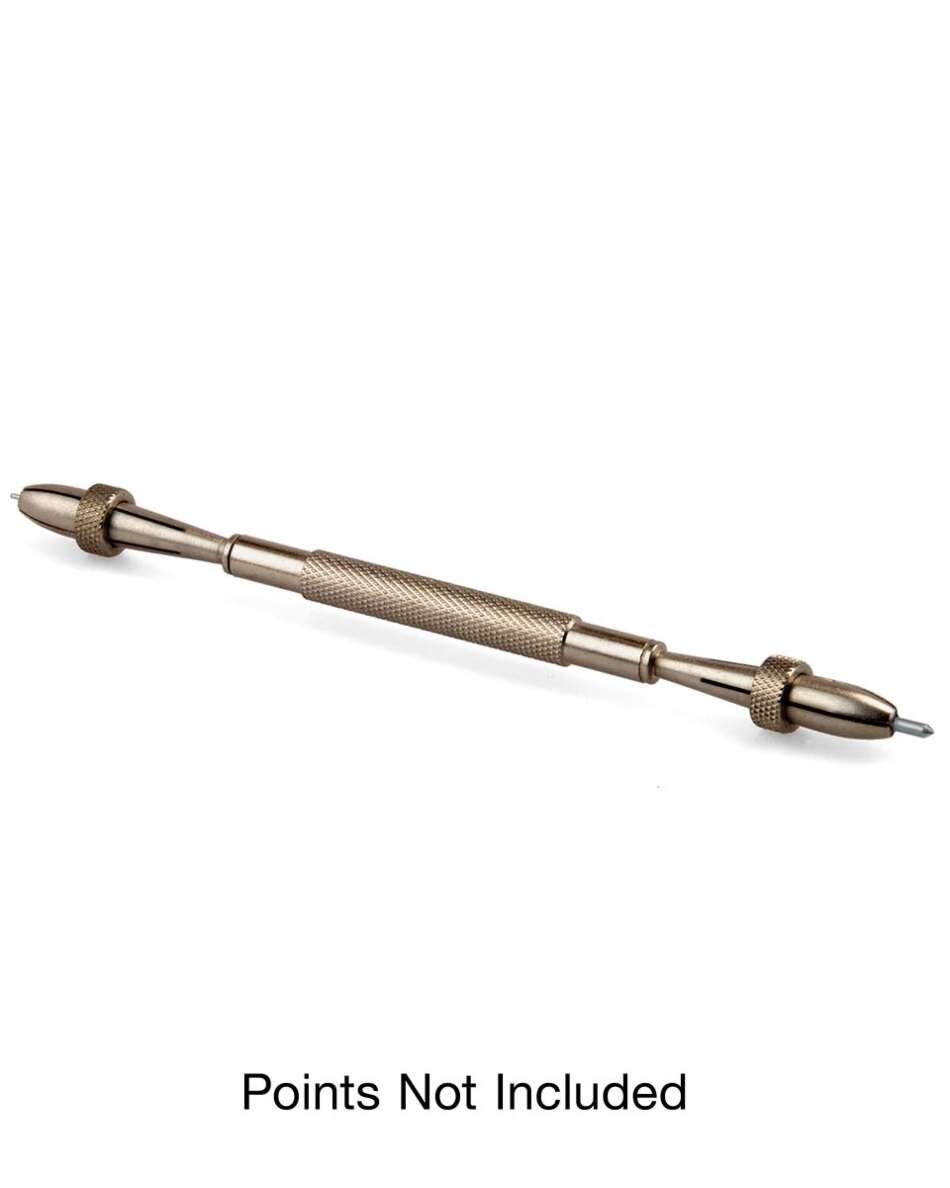
When a replica is too expensive for your taste, but you would like one that fits comfortably in your hand, there are the silverpoint holders. Most are some variation of clutch pencils or mechanical pencils. And then there is the option of crafting one from scratch.
Cornelissen used to have a nice double-sided holder with thick, blank metal screw ends (about 35 euro *without* the silver). The ends are thicker than those of most metalpoint holders. The advantage of this is that it is easy to handle.
A metal holder for metalpoint is no problem if the handle ends are not so thick you risk them touching the paper and make unwanted marks when you hold the silverpoint at a low angle. The newer model has its metal ends painted black. I don’t know, yet, whether this solves the problem.
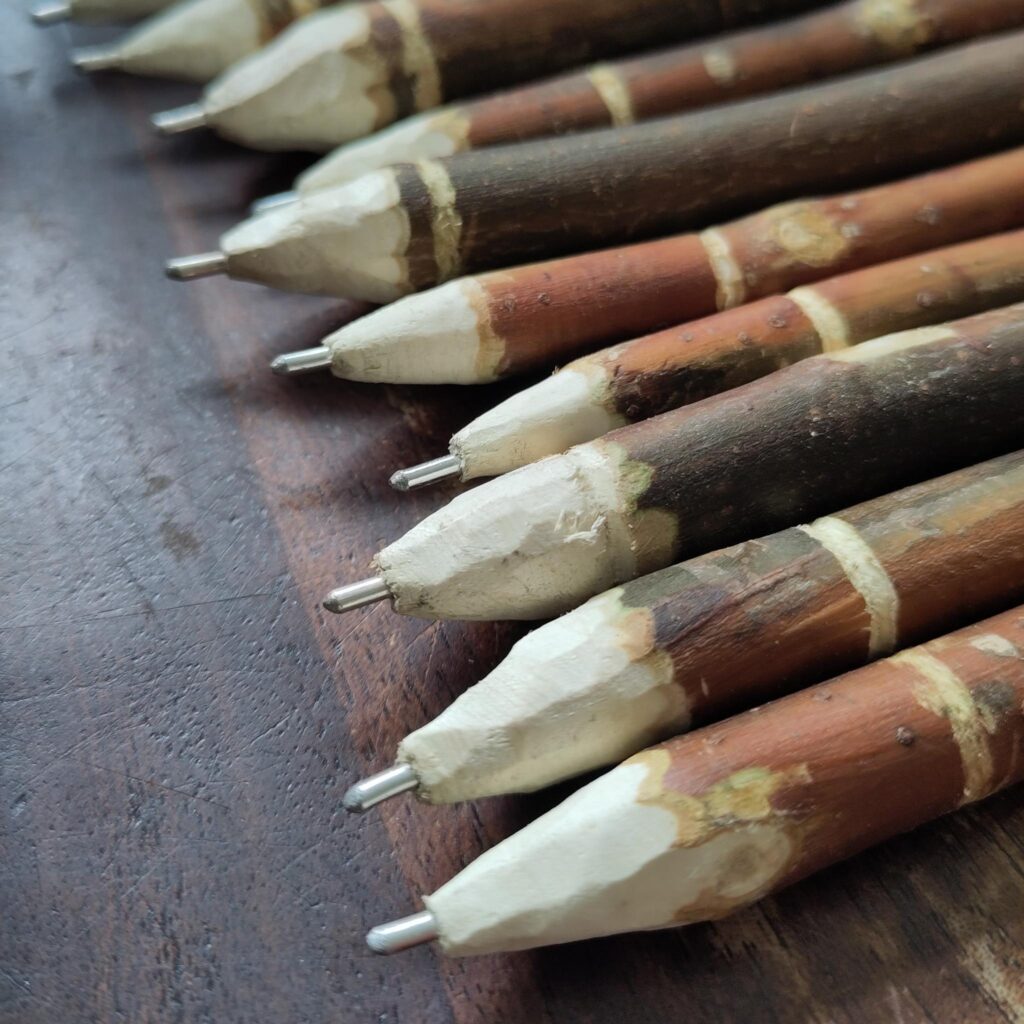

DIY Wooden Silverpoint Holders
So naturally, I started to experiment with making my own metalpoint holders. I learned that I’m not the only metalpoint artist to do so. I even sold them for a while because they are so very, very cheap, it’s great for starters who first want to try before they make a real commitment to the medium. You only pay for the silver, any wood will do. The idea is simple: a wooden handle.
Drill a hole in a stick, fill the hole with the metal rod and draw. The metal can’t be sharpened by a pencil sharpener, but the wood can, or by a knife. You can only use short ends of metal wire, though. It is very hard to find a drill bit that’s 1 or 2 mm thick but 10 cm long, and just as hard to drill with. The downside of using short bits of metal wire, that the last half a centimetre or so is waste. The shorter the piece of wire, the more precious metal you waste.
Alternatively, you can do as the first pencil makers did and use a wooden handle that’s split lengthwise, insert wire between the parts and glue or bind the parts together. In the end, it’s quite the hassle.
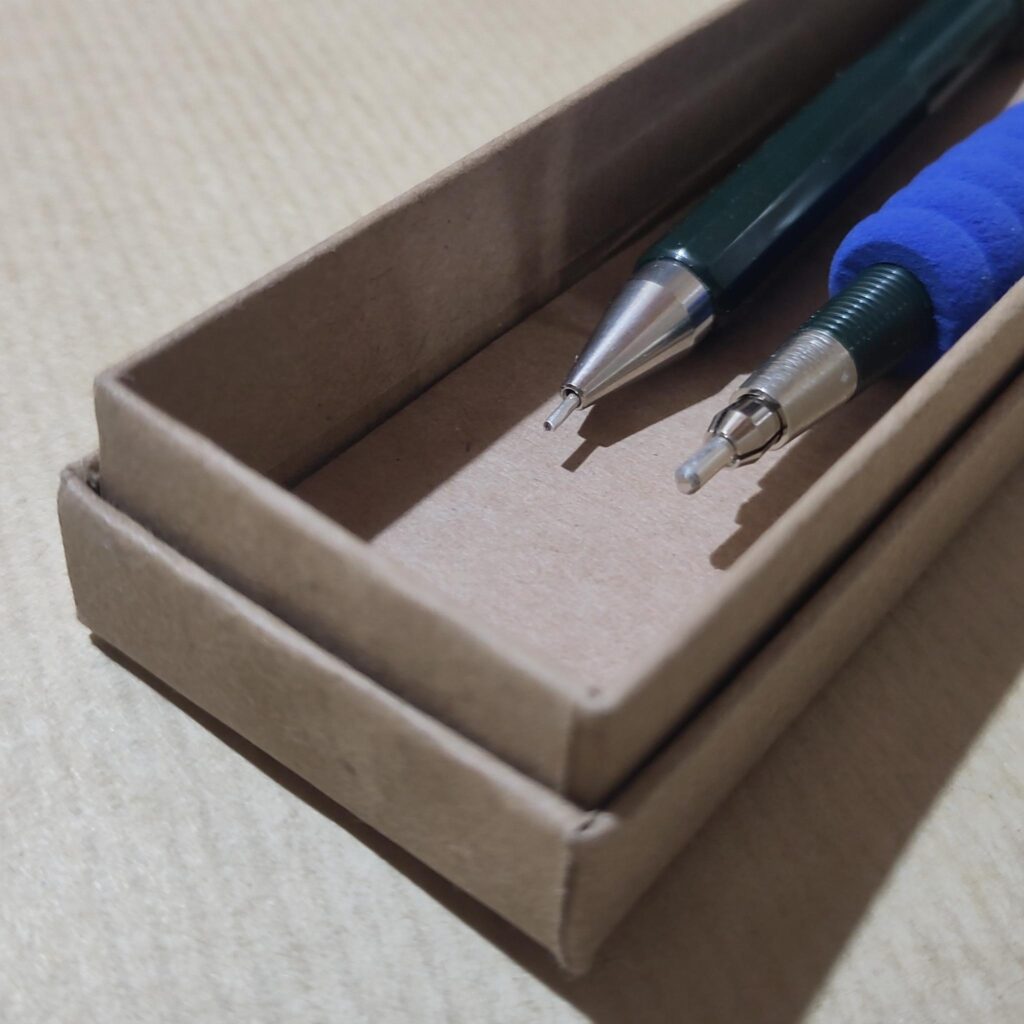
Mechanical Pencils or Clutch Pencils
So I ended up with mechanical pencils or clutch pencils. I have been using them ever since. It’s not fancy, it’s not historically accurate, no one would even recognise that it’s a silverpoint when you use it. But it works, it’s fairly affordable and very durable.
Chuck out the graphite leads and insert the wire. Don’t buy the cheapest plastic model, that will break easily. Try out brands and sizes, not all mechanical pencil sizes have matching metal wire sizes and the other way round. Metals are less forgiving than pencil leads, it seems, or pencil leads are a tiny bit smaller than the size they advertise with, because sometimes 1.0 mm does not fit a 1.0 mm metal wire. Try and try, or simply buy here (or use the brands and sizes I sell here).
Silver Wire and Where to Buy It
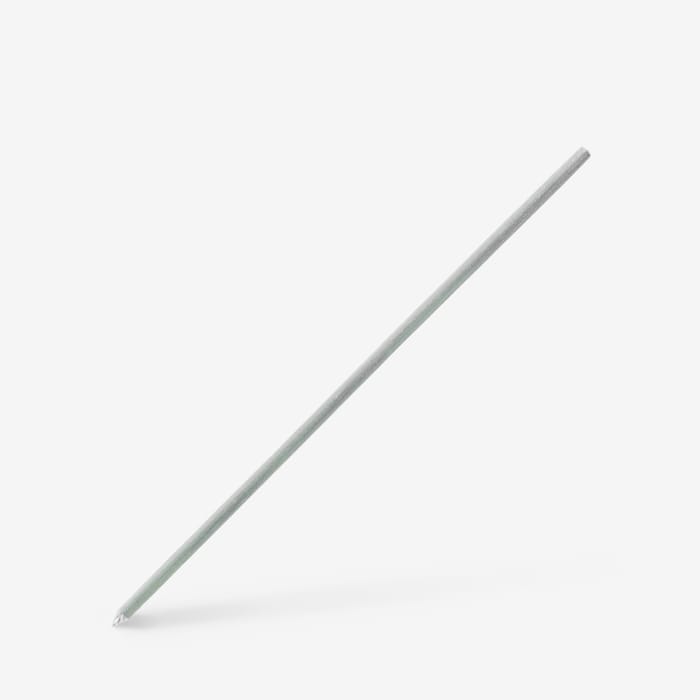
You can buy a silverpoint 2 mm by 9 cm at the Italian shop Zecchi (around twenty euros) or for double at Jackson’s Art, to be used in pencil clutches. That amounts to 2 – 4 euro per cm. If you buy 2 mm silver wire from a goldsmith wholesale shop, you pay 1.70 euro per cm (129 DKK). So generally spoken, if it says “silverpoint” or “metalpoint”, you pay more than if it’s just the metal wire wholesale.
Or buy a complete set here in the metalpointdrawing.eu webshop if you’d like to try out the medium first.
The origin of the silver also influences the price. Chinese mines do not have to be so strict when it comes to the environment or working conditions. Despite the slightly higher price, my preference is definitely for European mines. When a shop does not advertise with European provenance, it’s probably from Chinese mines.
