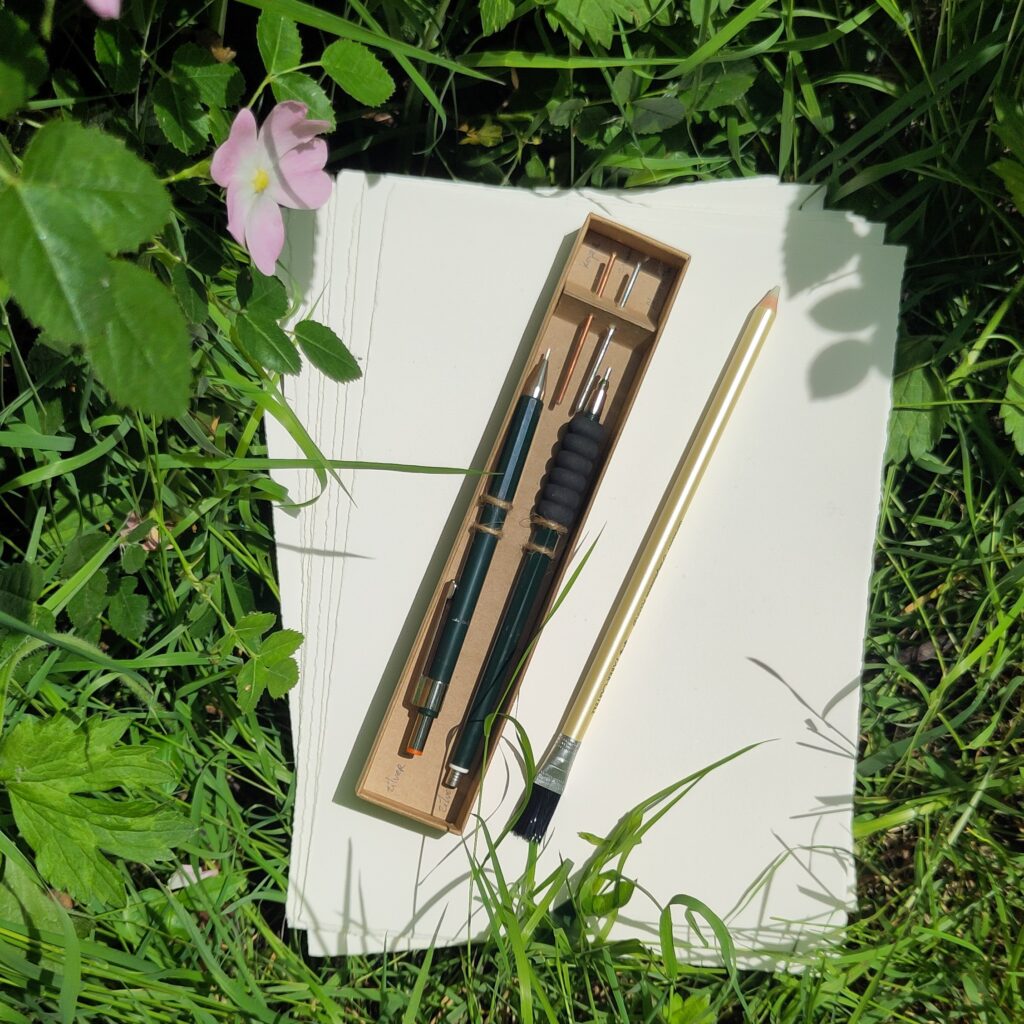
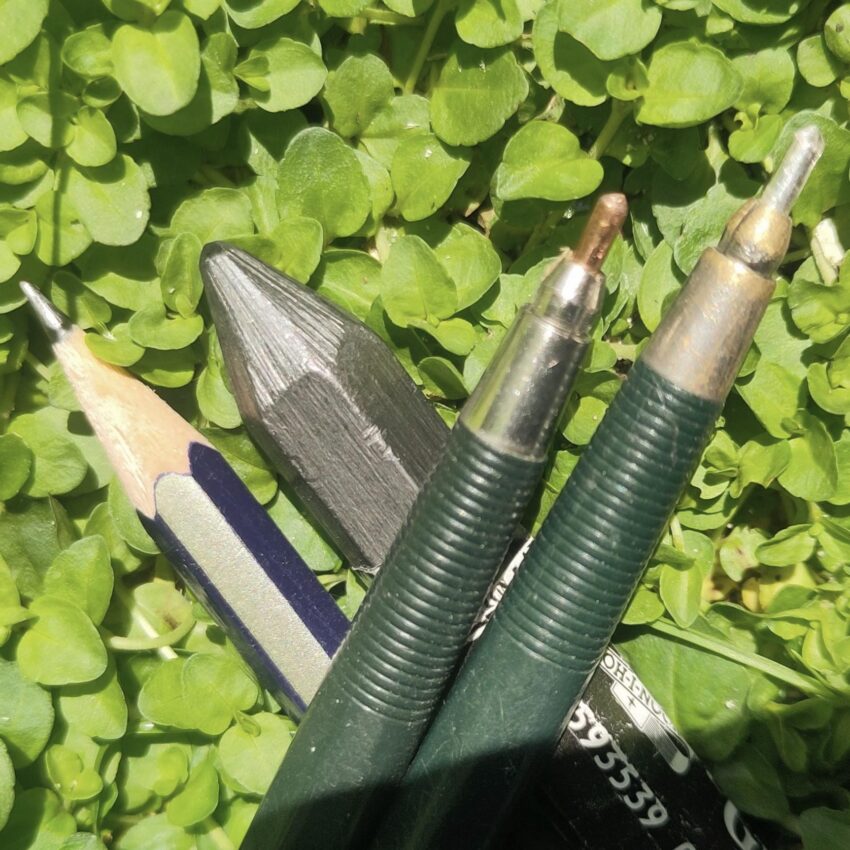
The most obvious comparison between silverpoint and another artistic medium is with its successor and, to a large extent, replacement: the pencil. A layperson unfamiliar with this medium might easily mistake a silverpointdrawing for a pencildrawing. Although the results look more or less similar, they differ considerably in their application and in the availability of their supplies.
Why Not Just Draw With Pencil?
The best answer is: ‘Why not?’ Variety fosters creativity. You could also turn the question around: why not ‘simply use a silverpoint’? After all, this technique is older. Draw with the medium that suits you best. I’ll explain the differences here and tell you why I draw with a silverpoint, so that you can make an informed decision. And if you’re in any doubt, just give it a go.
Silver Produces Lower Contrast
The darkest shade you can achieve with silverpoint is lighter than the one you can achieve with soft graphite. If you’re lucky, you can compare 999/1000 silver to an H or HB pencil. Softer graphite can therefore be much darker.
Low contrast is by no means a disadvantage, but rather a choice. Low contrast is common in drawing anyway, but in painting too, artists such as Luc Tuymans, Claude Monet and James McNeill Whistler often opted for low contrast.
Furthermore, this ‘disadvantage’ can be put into perspective. With a bit of practice, you can make silver quite dark. You can also use softer metals such as aluminium for the darkest details or even use them exclusively. A good curator ensures that the surrounding elements do not overshadow the artwork. In the rest of life, too, a gentle voice can be very important.
Before I started using silverpoint, I liked to use combinations in my drawings of lighter areas, drawn with a hard pencil, and darker areas with a soft pencil or charcoal.
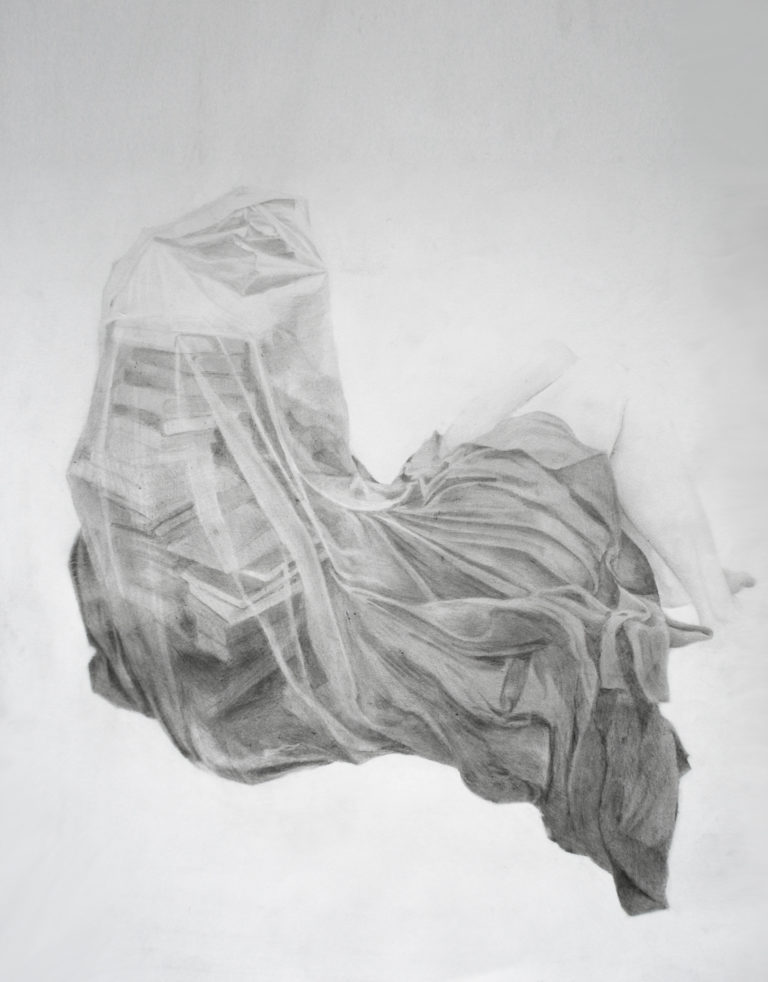
Is Graphite More Spontaneous?
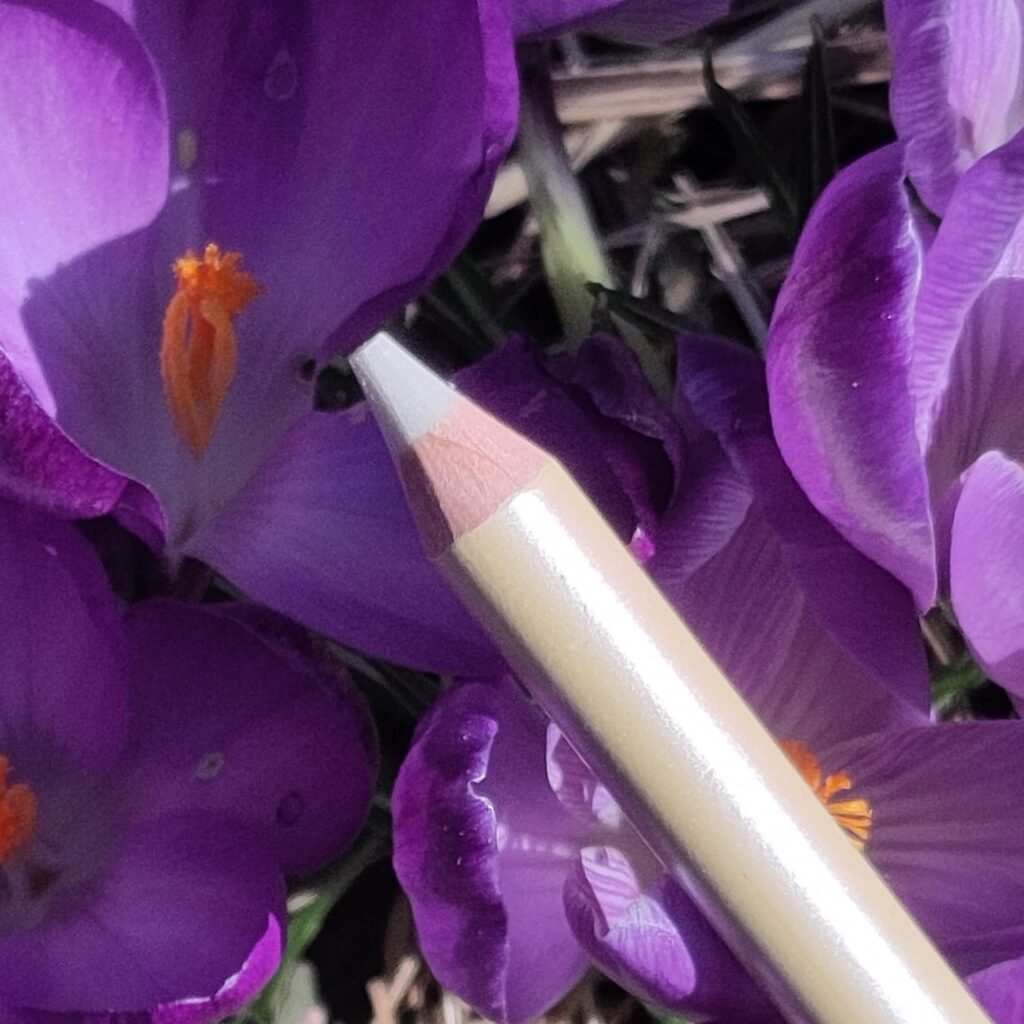
A persistent misconception is that you cannot erase silverpoint. This misconception arose because much of the focus on silverpoint comes from art history: in its heyday, bread was used as an eraser, which is unsuitable for silverpoint. Today, erasing silverpoint is a bit more difficult than with pencil, but it is certainly possible with the right eraser. To put it in perspective: just try erasing an area that’s been filled in vigorously with a B7 or softer pencil.
The angle of the silverpoint to the paper is a bit more unforgiving than with graphite because the silverpoint can become much sharper and the ground is vulnerable. But experience remedies this drawback. You also need specially prepared paper for silverpoint; not every sheet of paper is suitable, nor is every kind of ground.
History and my own experience contradict this. I prepare large quantities in a single day (after which my entire studio is full of sheets left to dry). I have enough experience using it and I know how to erase it. I don’t use it to make quick sketches on the road, but in the past, silverpoint was specifically the medium for use on the road.
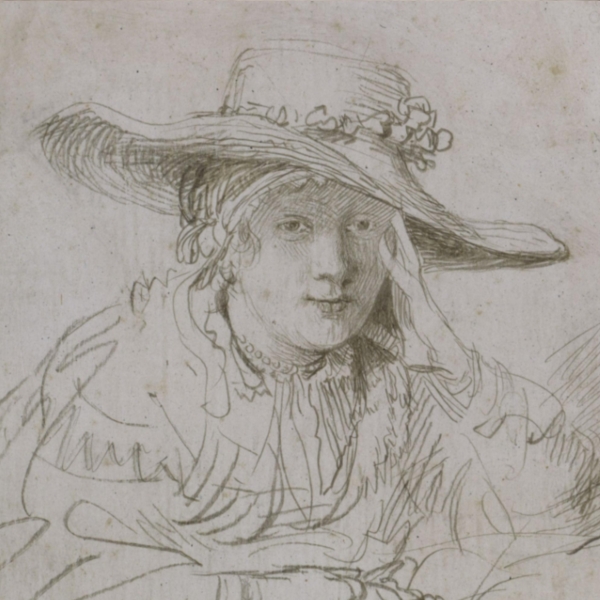
Rembrandt, Dürer and other old masters brought prepared paper or prepared parchment in booklets with them and made sketches that they sometimes expanded into a painting. Silverpoint was also used on parchment for quick, temporary calculations and notes in trade, after which it was sanded off and the surface was quickly primed again.
Silverpoint Feels Deliberate
Precisely because silverpoint is slightly harder a technique to master and produces less contrast, you often need more hatching than with soft pencils, charcoal and chalk. I find this cross-hatching pattern very pleasing, as it makes it easier to work with precision and connects the different parts within the drawing, but it is also very labour-intensive. The positive aspect of this intensity is that silverpoint gives a deliberate, balanced and purposeful impression.
A Tricky Technique?
Silverpoint has a slightly steeper learning curve than graphite. Even a small child can draw quite a lot with a pencil in their hand. With silverpoint, you first have to learn how to prime the paper. You’ll pick that up quickly. Then you have to get used to holding the stylus at a specific angle, as mentioned earlier, so that you aren’t caught out by a sharp edge that damages the primer.
Building up dark areas more slowly through hatching is not a major challenge for someone used to drawing with a pencil. Perhaps what requires the most practice is judging the darkest areas in your drawing and how much ground layer you can use. These two things are linked, as you’ll most often need to go over the ground layer in the darkest areas. The amount of hatching the underlay can withstand is limited. It is therefore best to start with the darkest areas, before you reach the limit halfway through and can no longer make them any darker.
Another tricky aspect in this regard is the fact that a silverpoint drawing tends to fade before fixating it. This is mainly due to oxidation, whereby the browned silver is lighter in colour than the original. Furthermore, the visible silverpoint drawing consists of very fine, abraded silver particles which, without fixating, can simply fall off your paper.
Warmer Through Oxidation
The colour of graphite is pretty much always the same, with hardness being the main variation, mostly in shades of grey. The colour is cool, bluish-grey. Silver starts out as a similar grey, but oxidises until it takes on a warm, brownish sheen. This makes the drawing look much more lifelike.
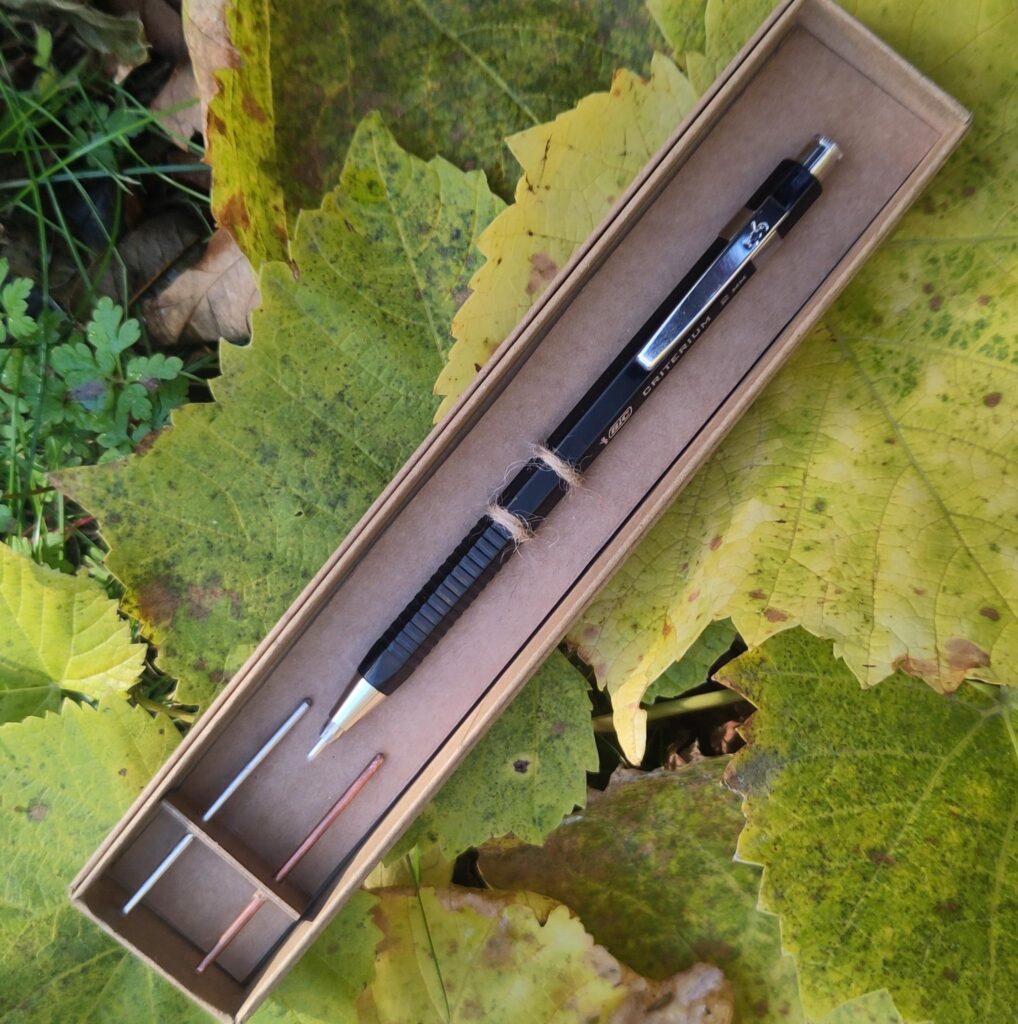
The medium is also known as metalpoint, as various metals can be used. Each metal has its own shade of grey. Silver is the warmest; copper is also more colourful; gold is light grey (with a golden sheen against a dark background); and aluminium is darker and bluish-grey. With these colours, you can also create subtle variations within a single drawing.
Precious Metal Sounds Expensive
At first glance, a pencil seems to be cheaper. Logically so, as silver is a precious metal, whereas graphite is simply a more common mineral. A pencil costs less than a silverpoint, so it’s not such a big deal if you lose it whilst out and about. However, a pencil doesn’t last nearly as long. By the end of the year, you won’t have spent any more money on silver in my experience.
A silverpoint places slightly higher demands on the surface. As you need to prepare the paper, it is advisable to use watercolour paper, which is more resistant to moisture. Added to this are the costs of the ground itself. The surface can be as expensive as you like, but it doesn’t necessarily have to be expensive.
Supplies Are Harder To Come By
Graphite is much more readily available than silverpoint, true. You can find a cheap pencil in the supermarket, and for the best graphite in various forms, you can turn to specialist art shops. However, these same shops on the mainland of Europe and in Ireland generally only sell, if any, one type of silverpoint (Abig / Cornelissen / Cretacolor, all the same) which I don’t like – not to mention the other metals. Or they sell very expensive facsimile silverpoints: very cool but if you’re not a cosplayer, all you need is a holder and a bit of 999 silver wire.
Silver wire can be bought from a wholesaler for goldsmiths. If you buy a thickness that’s also available in mechanical graphite holders, you have a very useful and affordable silverpoint. This can be expensive in small quantities and is sometimes not available in small quantities at all, therefor I offer starter kits in my online shop. So the hurdle of limited availability is a real one, but now that you’re here, you’ve already overcome it.
Conclusion: Silverpoint Or Pencil
I’ve already given away the final verdict at the start: silverpoint is a different medium to graphite and has different properties. Draw with the medium that suits you best. Silverpoint is hardly any more expensive, and once you’ve finished reading this blog (and I’ve finished writing it), you’ll know where to buy everything. Silverpoint takes a bit of getting used to, but ultimately it’s not that difficult compared to graphite. Why not give it a go?
-
FUNDAMENTUM METALLICUM (complete starters kit)
Original price was: € 62,75.€ 59,50Current price is: € 59,50. -
GUMMI
(eraser)€ 3,25 -
TRIA METALLA
(Silver, Aluminium, Copper)€ 27,50